Sunday, July 20, 2008

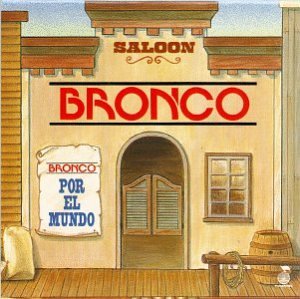
Por el Mundo

Customer Review: POR EL MUNDO IS A GREAT CD!
What can I say I LOVE THIS CD! But whats so good about it well number 1 I love the lead singers voice (Jose Guadalupe). To me he has a voice to kill for but thats just my opinion you might think diferently. But as far as i'm concerned i think this is a super album to buy cause every song on here is so good my personal favorite well... it would have to be number 3 (Aqui No Mas.) I just love that song I can not explain the feeling I get when I hear this song it makes me feel so good inside not to metion like I want to dance. but the song (Espinas) is good to hey there all good thats why I think you should buy this cd you will love it if you like banda musica like I do. Look i'm going to be honest with you I would never tell someone to buy a cd I never herd or thought was not a good cd to buy thats how I am but everybody has different taste in musica so u may like it may not but I know I love it and i'm so glad i bought it I would never get rid of it. Even though it is an old album of theres I still listen to it to this day thats how much I love this cd it was one of the best investments i ever made. I am a musica freak and I love mexican musica and and if you do to buy this cd.


PIANO GAMES

There are lots of fun games for the whole family that you can play using piano by number books. Here are just a few:

Name That Tune: One person plays the songs on the piano while everyone tries to guess the title of the song. Kids love playing the songs, so kids can take turns. You can also use the Play Along Audio CD, but kids also love being the center of attention and playing the songs on the piano.
Musical Chairs: Put chairs in center of room and when the music stops everyone has to find a chair, except there's always one chair too few. Use the CDs or have the kids (any age) play the piano.

Christmas Pageant: There's more than enough material on the Play Along Audio CD to present your own show. Kids (any age) will love putting it together, and can take turns playing along with the music or acting in the show.

Make Up Your Own Show: The Family Favorites section has 28 familiar melodies that creative kids can turn into a show about anything.

Have Everyone Try It! You'd be surprised what fun a family gathering can become when everyone is asked to play a song from the book. You'll discover that your family and friends have hidden musical talents! Most people really do want to try playing the piano, so make a game of it!

TEACHING GAMES

FOURS

(This game is available in GAMES FOR THE PIANO and you can click here to play FOURS on our online piano!)

"Fours" is the most basic rhythm game that I play with kids. I always use it on the first lesson, and on all subsequent lessons until the child seems too old for it. It's a fun but very childish game that teaches rhythm and piano geography without using printed notes or numbers of any kind.It's important for kids to actually play the piano without the encumbrance of graphic notation (notes or numbers) of any kind. For example, you'll notice that kids in general can go to the piano and play three songs:Chopsticks, Heart and Soul, Knuckles (that funny piece played on the black keys with the knuckles of the right hand!)

"Fours" is a piano game constructed in exactly the same mold. The child plays numbers and I play the chords. If the symbols below don't line up in your browser, remember that there are always four notes (numbers) for every chord (letter.) The child begins on "Middle C," also known as the number one: "1" The teacher plays the letters, or chords.

1111 2222 3333 4444 5555 6666 7777 8888

C G C F C F G C

I play a kind of funny Chico Marx oom-pah accompaniment using the chord pattern (C G C F C F G C, etc.) Kids find this very easy and refreshing. We play up the piano keys, moving to the right, with the natural goal being for the child to reach the highest key on the piano. I'm pretty "strict," that is, if the child breaks the rhythm or misses a key, we start over. Strangely enough, kids love to go back to the beginning and start over as much as they love going all the way to highest key.Fun variant: Ask them to count up the white keys until they reach the highest white key (starting from Middle C, which to them is #1) and tell you what the "number" of that white key is (it's 29.) This has no musical value except that it makes the child an explorer of the instrument.The object of these games is to make the child a keen and enthusiastic observer of their instrument, something impossible to do when the child is locked into reading only sheet music from a book. Kids need to improvise, however humbly, and essentially all of my games are designed to make fun music outside of sheet music, numbers or conventional.

"Fours" teaches a child that

1. sheet music is not always necessary to have fun with music

2. they have to count while they play

3. music is divided into numbered units

4. piano is a fun thing they can do right away

by John Aschenbrenner Copyright 2000 Walden Pond Press

Visit http://www.pianoiseasy.com and see the PIANO BY NUMBER method.

John Aschenbrenner is a leading children's music educator and book publisher, and the author of numerous piano method books in the series PIANO BY NUMBER.

90's dance music
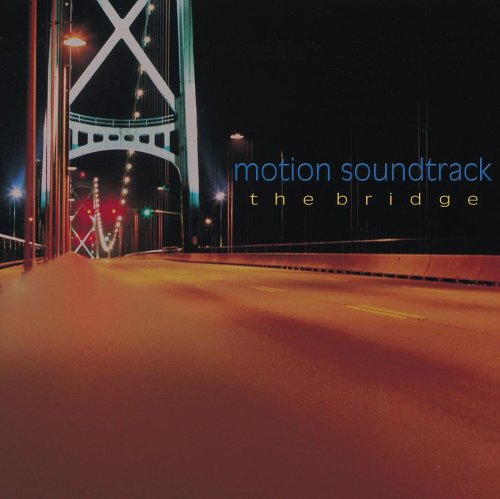
The Bridge

Customer Review: THEY ROCK!!!!
Motion Soundtrack is amazing. They sound even better live !! Everyone should have a copy of this album, they blow Oasis away!!!!


Even if you're sleeping on your buddy's couch, you CAN promote your band with little or no money. (You will need a computer and internet access)

#1. Get an Email Account. Free email accounts are available from Gmail, Hotmail or a lot of other web-based email companies. Simply go to their homepage and sign up for an account, and you'll be up and going in minutes.

#2. Get a MySpace Page. You can get the band a MySpace site for free. There you can also load up some of your songs, photos, etc. Once you have your site up email all your friends and fans to come check it out and add them to your friend list. You can then contact them all at once to announce future gigs, song releases, etc.

#3. Get Something to Sell. You can't make any money if you don't have anything to sell. When you're playing gigs, even free ones can make you money by selling stuff to the audience. Make sure you have copies of your music on CD or a flash drive to sell. You can also sell merchandise with your band's name and logo on it. You can do this online for free by setting up a virtual storefront at CafPress.com. They'll give you a little store front site and shore how your logo looks on multiple items you select. Once someone buys the stuff, they handle all the billing and shipping and send you a check.

#4. Get a Sponsor. No, not an AA sponsor! I mean a corporate sponsor who will give your band money to promote their company. Start off by looking for "Angel" sponsors. These could be parents, grandparents or friends of the family who have a little extra money to invest in your career. Then look to companies who would benefit from advertising to the audience you will be playing to. Auto dealers, clothing stores, soft drink or beer distributors, are also a good prospects. Show them that their money will be going directly into the creation of the marketing materials, and not the band beer fund! For example, you put their logo with yours on T-shirts, flyers, posters, banners, etc., in exchange for them paying for the cost of creating those pieces.

#5. Alert The Media. Contact local radio and TV station and offer to play any on or off air events or parties they are having. You may or may not get paid this time, but having your name on the minds and lips of the local movers and shakers can only help your career.

Get FREE music marketing tips, tricks and techniques like the pros use.

A hack guitarist himself, Brian Woeller now prefers to work behind the scenes, helping to promote musicians with "real" talent. His eBook, "How To Promote Your Band To Rock Star Status" (http://www.HowToPromoteYourBand.com) will jumpstart Your music and get you in the spotlight, fast.

dance dance music video

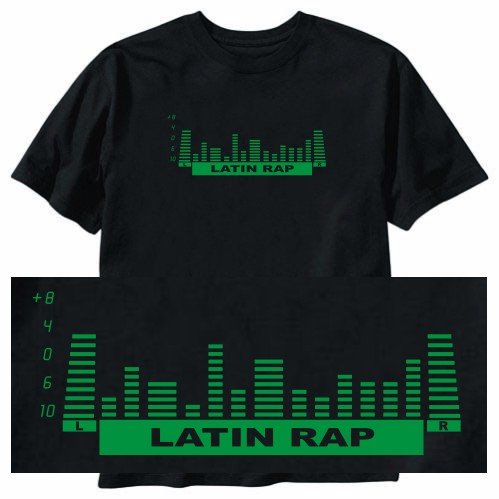
T-Shirt Black " Latin Rap Equalizer " Music

This is a great shirt. Great gift. All TopExpressions products are made under strict quality controls. 100% heavyweight cotton, weight aprox 9oz.


As a DJ, one of the basic fundamentals of performing is knowing how to mix music. Keeping
that smooth flow, rhythm and energy on the dance floor is essential to a Dj and their
performance in front of their crowd! In this article we will mention 5 secrets of Dj mixing
tips that any beginner needs to know in order to become successful.

Beat mixing has become easier than it used to be because most of todays dance music tracks
have lengthy introductions to a song and also long outro ductions to a song. With this in
mind, it has also become easier for for newcomers to come into the scene and get involved
because Dj equipment is as expensive as it used to be!

Here are some of the Dj mixing tips you need to know -

1. Almost all dance tracks have an intro where you can mix in the music and a break or outro
where you can mix out of a track. Commonly, the outro area on a dance track is often the
final opportunity to mix out of the song. You can also mix out of a dance track where there
is a breakdown in the record!

2. When listening to dance music and its structure, make sure that you listen to the drum
beat of the song. This is normally a 4/4 structure. Eg. 1,2,3,4 - 2,2,3,4 - 3,2,3,4 - 4,2,3,4
Counting the beats will help you understand where you need to place your mix with the other
record you wish to mix into.

3. So now, as you listen to the tune that is being played (song one) on the output (dance
floor) you need to cue the song that you want to beat match through your headphones on the
other turntable or cd. When tune 1 comes towards its outro section, you then need to start
the second tune on its first beat in which case this is the intro of the second tune. This is
where you start to beat match the to songs. As you match the drum beats of the two songs keep
your hand on the pitch of the tune that you are trying to introduce. Adjusting the pitch will
help you speed up or slow down the tune you are trying to introduce!

4. As one hand adjusts the speed of the incoming song, the other hand needs to be to be
adjusting the volume of the mixer and gradually sliding the cross fader from tune one to the
other. What happens when you do this is that song one decreases in volume and song two
increases in volume Thus completing the change over from one track to the other.

5. One of the most important things for a DJ to understand when in the mix, is to make sure
that he/she always keeps their hand on the pitch when adjusting a mix. Some Dj's don't realize
this, but touching the vinyl may create a swoosh sound that can disturb the mix and make it
sound like its not running smooth! So avoid touching the vinyl or platter when you are
adjusting the speed on a live mix!

These are the DJ mixing tips exposed. I hope they are some sort of use to you! Learn and
understand them as best you can and they will help you become better at mixing your music!

Yo DJ! Are you interested in more DJ mixing tips? Want to learn how to beat mix, scratch etc? Tired of searching the net for tutorials that give away limited info? Want to learn from a proven method that has helped hundreds if not thousands of beginner/intermediate DJs? Then please visit DJ mixing tips, or visithttp://www.musicinstrumentreview.info/djmixingtips.html

latin music festival

Clocks (Polyphonic Ringtone)

This product is a great sounding polyphonic ringtone for your cell phone. Ringtones are musical tunes and sounds that are played whenever your phone rings. Your phone must support polyphonic tones to use this product.


Like Fu Mingxia (Asian/ Olympic multi-medalist diver), Wang Junxia (track and field/ world record holder), Gao Min (world/ Olympic multi-medalist in diving) and Li Ning ( gymnastics/ Olympic gold medalist, 1984), Yao Ming (basketball player) is one of the favourites to light the Olympic flame on August 8th 2008. For his training, Liu Xiang -110m hurdles/ Olympic, Asian, world outdoor and world indoor champion- will probably not light the Olympic flame at the Opening Ceremony of the 2008 Summer Olympic Games in Beijing. Xiang's father said, "He has such a weighty responsibility on the track, he will not be the one to light the flame". Liu is one of the most famous athletes in the history.

The sports competition program of the 2008 Beijing Games can include only sports of International Federations recognized by the International Olympic Committee (IOC): archery, athletics (track and field), badminton, baseball, basketball, beach volleyball, boxing, canoeing (canoe/ kayak), cycling, diving, equestrian, fencing, football (soccer), gymnastics, handball, field hockey, judo, rowing, shooting, softball, synchronized diving, synchronized swimming, swimming (aquatics), table tennis, taekwondo, tennis, triathlon, water polo, weightlifting, volleyball, wrestling (freestyle & Greco-Roman) and yachting (sailing).

The Beijing Organizing Committee for the Games of the 29th Olympiad (BOCOG) sent invitations to all National Olympic Committees around the world (205 countries and territories). Curiously, China does not have formal diplomatic relations with Belize, Burkina Faso, Chad, Costa Rica, Dominica (former British colony in the Caribbean), Dominican Republic, El Salvador, Gambia, Guatemala, Grenada, Haiti, Honduras, Liberia, Malawi, Marshall Islands, Nauru, Niger, Palau, Panama, Paraguay, Saint Kitts and Nevis, Saint Vincent and the Grenadines, Sao Tome and Principe, Senegal, Solomon Islands, Swaziland, Tonga and Tuvalu.

This Asian country has hosted many world championships/ international games:

The 1961 ITTF Table Tennis World Cup, Beijing

The 1991 FIFA Football Women's World Cup, Guangzhou

The 1993 East Asian Games, Shangai

The 1996 Asian Winter Games, Habian

The 1999 World Gymnastics Championship, Tianjin

The 1985 FIFA U-16 World Championship, Beijing

The 2002 FIBA World Championship for Women, Beijing

The 2005 AIBA Boxing World Championship, Mianyang

The 2005 East Asian Games, Macau

The 2006 ISF Softball Women's World Cup, Beijing

The 2006 Lusophony Games, Macau

The 2007 Asian Winter Games, Changchun

The 2007 Asian Indoor Games, Macau

The 2007 FIFA Football Women's World Cup, Shangai

The 2007 WTF World Taekwondo Championship, Beijing

The non- Olympic sports are: aikido, billiards, bodybuilding, bowling, chess, cricket, golf, Kabaddi, karate, kendo, kuoshu, racquetball, roller skating, rugby, sepaktakraw, squash, water skiing.

During the XXIX Summer Olympic Games, the Beijing Hotel will serve as the headquarters of the International Olympic Committee (IOC) and guests. It is one of the most distinguished hotels in the world.

China -it is a little bigger than the United States- has won 112 Olympic gold medals. After their first appearance at the 1984 Olympic Games, the Chinese team has been the most successful team in Asia.

Hosts................Gold...Silver....Bronze...Total...Ranking

L.A'84...................15.......8..........9............32........4

Seoul'88...............5.......11........12..........28.......11

Barcelona'92.....16......22........16...........54........4

Atlanta'96............16......22........12..........50........4

Sydney'2000......28......16........15...........59........3

Athens'2004......32......17........14...........63........2

The following countries will participate in the Olympics in China:

1.Afghanistan

2.Albania

3.Algeria

4.American Samoa

5.Andorra

6.Angola

7.Antigua & Barbuda

8.Argentina

9.Armenia

10.Aruba

11.Australia

12.Austria

13.Azerbaijan

14.Bahamas

15.Bahrain

16.Bangladesh

17.Barbados

18.Belarus

19.Belgium

20.Belize

21.Benin

22.Bermuda

23.Bhutan

24.Bolivia

25.Bosnia Herzegovina

26.Botswana

27.Brazil

28.British Virgin Islands

29.Brunei Darussalam

30.Bulgaria

31.Burkina Faso

32.Burundi

33.Cambodia

34.Camerron

35.Canada

36.Cape verde

37.Cayman Islands

38.Central African Republic

39.Chad

40.Chile

41.China (The People's Republic of China)

42.Chinese Taipei

43.Colombia

44.Comoros

45.Congo

46.Congo Republic

47.Cook Islands

48.Costa Rica

49.Cote d'Ivoire

50.Croatia

51.Cuba

52.Cyprus

53.Czech Republic

54.Denmark

55.Djibouti

56.Dominica

57.Dominican Republic

58.Ecuador

59.Egypt

60.El Salvador

61.Equatorial Guinea

62.Eritrea

63.Estonia

64.Ethiopia

65.Fiji

66.Finland

67.France

68.Gabon

69.Gambia

70.Georgia

71.Germany

72.Ghana

73.Greece

74.Grenada

75.Guam

76.Guatemala

77.Guinea

78.Guinea-Bissau

79.Guyana

80.Haiti

81.Honduras

82.Hong Kong

83.Hungary

84.Iceland

85.India

86.Indonesia

87.Iran

88.Iraq

89.Ireland

90.Israel

91.Italy

92.Jamaica

93.Japan

94.Jordan

95.Kazakhstan

96.Kenya

97.Kiribati

98.Korea, North

99.Korea, South

100.Kuwait

101.Kyrgyzstan

102.Laos

103.Latvia

104.Lebanon

105.Lesotho

106.Liberia

107.Lybia

108.Liechtenstein

109.Lithuania

110.Luxembourg

111.Macedonia

112.Madagascar

113.Malawi

114.Malaysia

115.Maldives

116.Mali

117.Malta

118.Marshall Islands

119.Mauritania

120.Mauritius

121.Mexico

122.Micronesia

123.Moldova

124.Monaco

125.Mongolia

126.Montenegro

127.Morocco

128.Mozambique

129.Myanmar

130.Namibia

131.Nauru

132.Nepal

133.Netherlands

134.Netherlands Antilles

135.New Zealand

136.Nicaragua

137.Niger

138.Nigeria

139.Norway

140.Oman

141.Pakistan

142.Palau

143.Palestine

144.Panama

145.Papua New Guinea

146.Paraguay

147.Peru

148.Philippines

149.Poland

150.Portugal

151.Puerto Rico

152.Qatar

153.Romania

154Russia

155.Rwanda

156.Saint Kitts and Nevis

157.Saint Lucia

158.Saint Vincent and the Grenadines

159.Samoa

160.San Marino

161.Sao Tome and Principe

162.Saudi Arabia

163.Senegal

164.Serbia

165.Seychelles

166.Sierra Leone

167.Singapore

168.Slovak Republic

169.Slovenia

170.Solomon Islands

171.Somalia

172.South Africa

173.Spain

174.Sri Lanka

175.Sudan

176.Suriname

177.Swaziland

178.Sweden

179.Switzerland

180.Syria

181.Tajikistan

182.Tanzania

183.Thailand

184.Timor-Leste

185.Togo

186.Tonga

187.Trinidad & Tobago

188.Tunisia

189.Turkey

190.Turkmenistan

191.Tuvalu

192.Uganda

193.Ukraine

194.United Arab Emirates

195.United Kingdom

196.United States

197.United States Virgin Islands

198.Uruguay

199.Uzbekistan

200.Vanuatu

201.Venezuela

202.Vietnam

203.Yemen

204.Zambia

205.Zimbabwe

Alejandro Guevara Onofre: He is a freelance writer. Alejandro is of Italian, African and Peruvian ancestry. He has published more than seventy-five research paper in English, and more than twenty in Spanish, concerning the world issues, olympic sports, countries, and tourism. His next essay is called "The Dictator and Alicia Alonso". He is an expert on foreign affairs. Alejandro is the first author who has published a world-book encyclopedia in Latin America.

He admires Frida Kahlo (Mexican painter), Jos Gamarra (former president of the Bolivian Olympic Committee ,1970- 1982), Hillary Clinton (ex-First Lady of the USA), and Jimmy Carter (former President of the USA). Alejandro said: "The person who I admire the most is Jos Gamarra . He devoted his professional and personal life to sport. Jos played an important role in the promotion of Olympism in Bolivia -it is one of the Third World`s poorest countries- and Latin America. His biography is interesting". The sportspeople he most admire is Olympic volleyball player Flo Hyman. "This African-American sportswoman is my idol... "

dance music charts

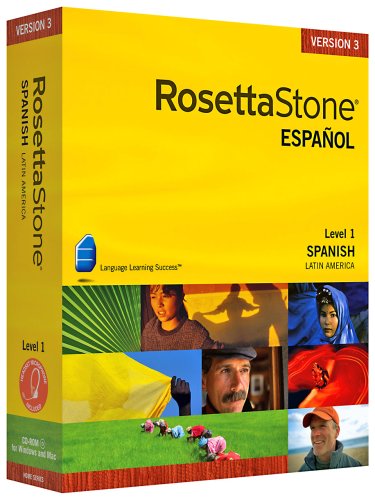
Rosetta Stone V3: Spanish (Latin America), Level 1

Why is Rosetta Stone the world's No. 1 language-learning software? Because it works.

Escape the endless tedium of translation, memorization, and grammar drills. Get the language you want, the skills you need and the success you deserve by learning a new language naturally--the same way you learned your first language.


The complete immersion environment puts your native language-learning skills to work, eliminating your dependence on tedious translation and rote memorization.

Images Intuition

In Rosetta Stone you learn the meaning of new language from clear, real-life images.


In this activity you learn colors.

You advance using language you've learned and clues from new images. That's your intuition at work.


Now that you know colors, you can easily grasp the meaning of the new words...

Interactivity Instruction

Throughout Rosetta Stone, you constantly interact with the program to confirm your intuition.


...and then check what you've learned.

From beginning to end you build systematically toward your language-learning goals, for the most effective and enjoyable instruction anywhere.


And finally, you get the fun of trying your new language in a real-life simulation. Speech recognition shows you exactly how you're doing.

You learned your first language without translation.
You learned your first language easily and naturally by connecting words to objects and events around you. With Rosetta Stone, learn a new language the same way: using native speakers and thousands of real-life images to help you think in the new language from the very beginning. Studies show that learning exclusively in the new language, without translation as a crutch, is crucial.

The exclusive Dynamic Immersion method reinforces your natural language-learning skills with award-winning instructional technology. Identify your learning goals, then choose customized courses that take you there.

The timeless immersion method, along with research-based techniques and new technologies, make Rosetta Stone the clear solution to your language-learning needs.

What will you be able to do?

Understand everyday language.
Through Rosetta Stone's proficiency-based listening and reading activities, you'll learn quickly.

Pronounce words correctly.
After practicing with Rosetta Stone's speech recognition and analysis tools, pronunciation will come easily.

Speak without a script.
Contextual Formation makes sure you have the confidence and cues you need to get the words out on the spot.

Spell and write accurately.
You'll build gradually from letters to words and sentences.

Engage in real-life conversations.
With Milestone activities, gain confidence using speech alone in simulated situations.

Retain what you learn.
The unique Adaptive Recall reinforces language so it sticks with you in the real world.
Customer Review: Very Simple to Use
Rosetta Stone is very simple to use. However having a Spanish book, or obviously a native speaker to supplement the software would make it much more effective. This is because of being tossed directly into the language without a clear translation leaves the door open for some confusion. Overall a great interactive product that is a strong foundation to start learning a new langauge.
Customer Review: YOU NEED TO KNOW THIS
You cannot legally sell this software when you are done with it. They threatened to sue me when I did - they said I had not bought the software, but a license for the software and it was nontransferrable - that I did not have the right to even GIVE it away.


Out of the 250 million people in the United States, about 25 million of them play an instrument of some kind, or used to when they were in school and would like to pick up where they left off. Another 30 million or so sing in a church choir, a barbershop quartet, or at the very least, in the shower.

That means that there are over 50 million folks adults who would like to play their instrument or sing better than they do now. After all, everyone wants to improve his or her skills, no matter what the field.

Before the advent of the Internet, if adults wanted to learn to play a musical instrument, they had to schedule a lesson time with a teacher in a store or studio or if they were fortunate, in their own home with a teacher who would come each week for a lesson.

That meant doing it after work, driving to a store or studio, dealing with transportation, babysitting, illness, cancellations, and so on. Very few adults who started lessons that way continued very long, as it was a continual hassle.

But with the development of the World Wide Web, music teachers have gone online to offer lessons to adults in the comfort and convenience of their own homes. No scheduling problems, no transportation issues, no cancellations none of the problems inherent in traditional lessons.

Here are a few of the many courses available for adults online:

Jamorama Guitar Course

Stripped-Down Guitar Course

SlapBass Guitar Riffs

Guitar Made Easy

Acoustic Guitar Workshop

Screaming Fingers Guitar Course

One Weekend Guitar

Make Money Teaching Guitar

Learn Chords Fast

Instant Chord Finding Software Download

84 Piano Chords

Crash Course in Exciting Piano Playing on DVDs!

How To Play Piano By Ear

How To Dress Up Naked Music

How To Play Praise & Gospel Piano

How To Play Black Gospel Piano

How To Play Contemporary Urban Worship Piano

All The Chords In The Whole Wide World

How To Play Chord Piano...In Ten Days!

Learn To Play Electronic Keyboards

Singing Success!

Drum patterns online to download!

Your own "Drum Machine" online!

Learn to read music fast

Children Can Read Notes Easily!

Learn to Read Music in One Evening!

Even though this is a big list of music courses for adults now, it is growing at an exponential rate. The opportunity for learning music at your own pace online has never been greater, so take advantage of it and start improving your musical skills without delay!

Duane Shinn is the author of over 500 music educational materials for adults. A review of music courses online is at "Great Music Courses Online!". Duane is the author of the popular free 101-week online e-mail newsletter titled "Amazing Secrets Of Exciting Piano Chords & Sizzling Chord Progressions" with over 58,600 current subscribers.

latin music downloads

COLDPLAY 11X14 COLOR PHOTO

At Moviestore we have an incredible library of celebrity photography covering movies, TV, music, sport and celebrity. Our exclusive photographs are professionally produced by our in-house team; we perfect bright vibrant colors or wonderful black and white tones for our photographic prints that you can display in your home or office with pride. All our images are produced from genuine original negatives and slides held in our vast library. We have been in business for 16 years so you can buy with confidence. Our guarantee: if you are not fully satisfied with any print from Moviestore we will gladly refund your money!


History shows us through paintings that the veil came to symbolize the untouchable and tantalizing appeal of women in the Middle East. To show just a little part of the body was alluring enough to cause men to pine for women's affection. If we look at 19th Century paintings of various scenes of women dancing, the look of the belly dancer is quite refined. The distinctive folds in the belt or the accessories from the ankle all the way to the headpiece tell the individual story of each dancer. This is how dancers from the past to the present set themselves apart from their contemporaries.

I can remember seeing "Cleopatra" starring Elizabeth Taylor for the first time and thinking how beautiful the costumes were and how much fun they would be to dance in. "Samson and Delilah" with Hedy Lamarr is my all time favorite biblical movie and her costumes inspire me even to this day. Claudette Colberts costume in the 1934 "Cleopatra" looks like a costume of today. Hollywood had very unusual ideas about what the women from the Middle East wore. But if we look back through time the belly dance costume really hasn't changed all that much. This really surprised me because as I was doing my research it became apparent to me that when you have a good design it's hard to improve on it.

Recently I danced with a wonderful group of performers who were Asian dancers. Their costumes were amazing and I have to admit that I felt a little out of place in my cabaret costume. Their movements were very subtle and their gestures very soft and poetic. Which made me wonder what kind of poetry would belly dancing be? When it was time for me to perform I realized that our music really says a lot about our image. My costume was like magic because it made me feel free enough to dance and tell our story within my movements and gestures. In some ways I felt an obligation to relate to the audience that what I do as a dancer and performer is serious and respected.

But I have to question why I even felt the need to defend my costume and dance form. The dancers with their movements almost seemed to speak to me teasingly asking me why I wasn't covered more. Maybe I was just hearing my own voice questioning this. After I finished my dance the response I received overwhelmed me. It became apparent to me that because of the difference of my costume and dance the audience was able to appreciate the culture that I represented. Costuming really does make the difference for people. It's almost as if the audience can see the story within our movements all the while watching our costumes accenting each word danced through our bodies.

Years ago when I was in Cairo I was able to see Zuhair Zaki dance live and as I look back I realize how lucky I was to have seen such a legend perform. Zuhair Zaki is the total sum of what the belly dance image is for me. Every movement told a story and helped me "hear" the music. I was taught a very good lesson that night because I saw what a masterful dancer can do with music. I also saw Zuhair Zaki become the essence of belly dance as she performed. It wouldn't have mattered what she wore or where she was. The spirit of the dance was in her and you could see it and feel it. These are those spiritual moments that change you forever!

A few weeks later I saw Dina perform and was totally surprised at the sexual innuendos that emanated from her dance. The image of belly dance changed that night for me because I had assumed that provocative gestures were not allowed. Actually let me take it a step further, I didn't think it was necessary. But somehow Dina made it work for her and as I watched her performance I saw that she did a wonderful job. Her sexuality never got in the way of her performance. It enhanced her movements and I understood at that moment that Dina chose to dance free of any inhibitions or restraints her world put on her.

As a modern woman I often wonder how close my image is to women back hundreds of years. Our evolution as women has never been more evident than in the belly dance world. If we look at the dance of the seven veils the removal of the veils represent seven earthly illusions that fall away with each veil. In order for us to become the total feminine archetype in myth these veils must fall from us so we can transcend into the Goddess. As with all myths I wondered what these seven veils of illusion were because I had a suspicion that we may still be portrayed within this myth today. It became apparent to me that each illusion had an opposite side to it. So here's my version of the seven illusions.

1. The Virgin-Temptress

Many dancers have both abilities to enchant their audiences by offering the untouchable innocence of movement combined with eye contact that teases with a fleeting look.

2. Intrigue-deception

The ability to captivate our audience is a major part of our story telling but with all stories we must tell the audience that what intrigues them is only an illusion. This in itself can be perceived as a deception because we work so hard on the illusion that at moments it may become real.

3. Mother-Sex Goddess

Both of these describe the dilemma all women come across through out their careers. While we dance as women who understand what it means to carry and give life we are also expected to be proficient in the art of love. The illusion for most people is that we can be both but they want the two separate.

4. Wise woman-Childlike Innocence

The knowledge a dancer puts in her performing sets her apart from the average dancer. Knowledge is power and our movements speak volumes in regards to our history. The illusion here is that while we dance with experience our audiences to a certain degree want a virtuous dancer that will give them an unsullied look at our dance.

5. Wife-Mistress

In our dance we are compelled to perform from places of the heart. At least some of our music has this impassioned theme in certain songs. As women we feel the need to complete ourselves which is why we search for our mate. The mistress on the other hand is compelled to search outside of this completion which in itself is the wife's mirror opposite. We distance ourselves from the mistress personification yet in the eyes of our admirers the hope is that they get a glimpse of her.

6. Muse-transmutation

Poetry and music speak of the dancer that takes her audience to places of sublime heights. As dancers we are the muses of our times. At the same time we experience the audience that doesn't understand our dance and they try to alter it to fit their perception of the world. We than become a misunderstood version of our own poetry.

7. Diva-modest maid

A dancers self confidence has to come across to the audience or they will be sorely disappointed. Many fans expect a confident woman during and after shows. Yet I have found that dancers can almost believe too much in their personas that they create. We can get caught up in this illusion just as much as anybody. The catch here is to know when to turn your dance persona on and off.

As belly dancers we inspire so much in people and our allure isn't just the pretty costume, it is what we signify as women.

My question is do we understand what it is that we represent for so many? I have worked with a few women who were disassociated from their body image. They had no clue how beautiful they were because they bought into mixed messages from the media and cultural attitudes. How comfortable are we in the position of the archetype for today's women? If we can't get past the door of self appreciation, than I don't see us in the forefront of today's feminine society. Let us not forget how immeasurable we are as women. Our dance helps us create our own personal myth in which we than can escape into our own feminine image.

I have often wondered that after creating our feminine image, do we than transform gradually into her? Isn't this really what belly dance does? We heal and than become the women we are intended to be. This is how I believe the essence of belly dance lives and thrives through each generation of women. If we can understand our own image than we can be living examples of what belly dance is and the veils of illusion than become nothing more than invisible restraints that disappear through our own transformation. In this sense we than are reborn into women, who are comfortable in their own body, mind and spirit. And there is no better way to express our dance than by embracing who we are and dancing with veils of our choice.

latin cds

COLDPLAY Charcoal T-shirt


" Oh sun, rise. Particles are dancing. I see headless, footless spirits dancing with ecstasy. Some are dancing at the dome of the sky. Come close. I'll tell you where they are going."

That's Rumi speaking from the book, "Crazy As We Are," written by Dr. Nevit O. Ergin.

Rumi certainly had a way with words. Dancing is the motion of freedom; it connects me to the sound of my inner music, which is constantly playing in awareness.
Rumi was the original dancing mystic; he connected to his inner self by twirling, and this dance became the art of worship for his followers. Dancing has been used for centuries by cultures around the world to honor and worship a higher power.

Dancing takes me to a free zone where I can be myself and share my freedom with others. My body moves in gestures of playfulness and lighthearted actions that come from within me. I am in another place; a place of well being where there is only a feeling of my spirit gliding through the air of physical existence. Dancing is the art of lifting my ego to the door of awakening. Dancing makes me feel good; it brings out another part of me that bonds with the world around me. I am a particle of ecstasy floating with other particles that reach out and touch the stars. Dancing with the stars I become one of them in the artful movement of oneness. My consciousness is free to focus on other moments of reality and refresh my purpose of existence. The dance changes me into what I have always been but forgot I am; a dream of grand expansion.

The philosopher Friedrick Nietzsche explains dancing this way:

In song and dance man expresses himself as a member of a higher community; he has forgotten how to walk and speak and is on the way toward flying, dancing into the air. His very gestures are of enchantment... He feels himself to be a god, going about in ecstasy, exalted, like the gods beheld in his dreams... He is no longer an artist, he has become a work of art. In a paroxysm of intoxication the creative power of all nature has come to light in him at the highest rapture of the one that is All. Nature, with its true voice undissembled cries out to us: "Be as I am! I, the primordial ever-creating mother amidst the ceaseless flux of appearances, ever impelling into existence, externally finding in these transformations satisfaction."

So it is. The dance brings me the feeling of joy; it brings me the emotion of excitement; it entertains my spirit and I become who I am. The music is always playing all I need to do is hear it and get up from my seat of loneliness and dance. My dance fills the cracks in my thinking; paints my world with brightness and showers my reality with abundance.

May I have the next dance with you?

Howard (Hal) Thomas Manogue, was born in Philadelphia, and is a forerunner to the Indigo children, a now age term for misfit with an intuitive nature, a desire to know his truth with a gift of giving and sharing. Hal retired from the shoe industry after 35 years of sole searching, and discovered his real soul.

He enjoys art, music, philosophy, psychology, nature and people.

His poems have been published by: Mystic Pop Magazine, Children Of The New Earth Magazine, New Age Tribune, Seasons Of The Soul Newsletters, Lightship News and Writers In The Sky Newsletters. His essays can be found on Hal's Blog and Website: http://halmanogue.blogspot.com/
http://www.shortsleeves.net

He lives in Franklin Tennessee.

Hal's new book Short Sleeves Insights: Live A Ordinary Life In An Non-Ordinary Way will be in print in April. Visit any bookstore or Hal's website to get a copy. Hal's third Collection Of poetry: Short Sleeves A Book For Friends will also be in print in April.

latin music video

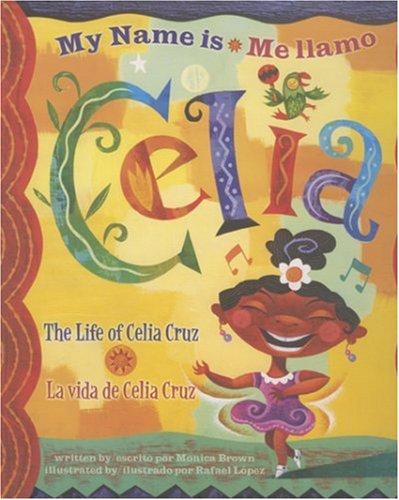
My Name is Celia/Me llamo Celia (Bilingual): The Life of Celia Cruz/la vida de Celia Cruz (Americas Award for Children's and Young Adult Literature. Winner (Awards))

This bilingual book allows young readers to enter Celia Cruz's life as she becomes a well-known singer in her homeland of Cuba, then moves to New York City and Miami where she and others create a new type of music called salsa.
Customer Review: Queen of Salsa
Celia Cruz is brought to life for young children in this colorful book. Like the tropics from which she came, the book is full of vibrant illustrations. The story is put into simple terms for young readers or a teacher or parent to read. Since the illustrations are so vibrant and bold children will be enthralled by the unique features of the art work. Each biographical page is bilingual for reading in Spanish or English or both. The book describes her early family life in Cuba, her departure after the revolution, her musical group Sonora Mantacera, meeting her musician husband,her associations with other salsa greats like Tito Puente and Willie Colon, her relocation to Miami and the various honors and recognitions she achieved. This is a great little book for primary and middle school libraries as well as community libraries. Students whoose first language is Spanish can benefit from the bilingual book through middle school years. This is a fun book.
Customer Review: Wonderful!
My Name is Celia: The Life of Celia Cruz is written by Monica Brown and illustrated by Rafael Lopez. The book is the recipient of a Pura Belpre' Illustrator Honor Award for outstanding work that portrays, affirms and celebrates the Latino cultural experience in an outstanding work of literature for children and youth. The exciting and inspirational life of beloved Cuban-born salsa queen, Celia Cruz, is celebrated in the bilingual book My Name is Celia Me Llamo Celia: The Life of Celia Cruz. Celia was born in Havana to a large family where their lives were intertwined and music was an important part of everyday life. Celia's papa wanted her to become a teacher but music filled her soul with happiness. She was encouraged by a teacher to "go out into the world and sing...." Celia experienced prejudice and fled her beloved country Cuba when the revolution began. From Cuba, Celia traveled the world sharing her love of music with the world. Rafael Lopez' illustrations are vibrant, fluid combinations of color that beg to be studied. The scenes fill the page and stir emotions as you read the story and live it through his drawings. Armchair Interviews says: My Name is Celia: The Life of Celia Cruz is a beautiful and educational addition to any child's library. We highly recommend it.


Folk wisdom holds that we use about 10% of our potential in a lifetime. New scientific research suggests the percentage is dramatically worse we use a mere 1/10,000th of our capabilities over the course of our lives. What a waste!

Can you imagine the benefit that you would contribute if you developed the capacity to use just 1% more of your talents to achieve what matters most to you? Is 10% too big a reach for you? I think not.

Among my most provocative teachers in the field of performance potential are the jazz musicians with who I work in my speaking and seminar business. They are masters at bringing their unique forms of excellence together to generate value for their audiences. They are passionate about increasing their potential to perform by constantly exploring new possibilities for achieving their purpose.

Why Jazz?

Warren Bennis is one of the worlds most influential writers on leadership and performance. In the mid-1990s, he had a significant change of mind. Before, his favourite image for a leader was the conductor of a symphony orchestra, blending the talents of accomplished performers according to a detailed and carefully crafted score. After, he realized that a jazz group was a better image for leadership and performance.

Excellence in performance in a constantly changing environment, he realized, was about improvisation, and that is what jazz musicians did best. They embraced change as opportunity, not threat. They shared leadership according to talent and the needs of the performance. They greeted surprise as a chance to test their talents and dance to forms of music yet to be heard, generating new value through their exploration of new possibilities. And they recognized, as sax great Cannonball Adderley once said, that there were no mistakes, only opportunities to learn.

Five Key Lessons from Jazz

Here are five the key lessons from the wisdom and workings of jazz about building your capacity to generate value through your unique excellence in performance. They form an acronym for VALUE:

Voicing

Aspiring

Learning

Utilizing

Encouraging.

Voicing

Your voice is unique. No one else has what you have to contribute in the style you have to deliver it. Your voice develops through the blending of your passions, talents, needs, and principles. Jazz musicians, pianist Walter Bishop Jr. once observed, learn in a three-step process: they imitate, assimilate, then innovate. They learn their craft from the masters, trying to imitate their sound. Then they take little bits of things from different people and weld them into their own style. Finally, they imagine how they can take the music to where it has never gone before and do it. That is when they generate their authentic excellence in performance. As jazz bassist and composer Charles Mingus once said, Im trying to play the truth of what I am. The reason its difficult is because Im changing all the time. You can meet the same challenges of improvisation with your unique voice in your chosen field of contribution.

Aspiring

You can survive by simply coping with the messes of the past and the present. But you will not thrive unless you focus the energy of your unique voice on new possibilities in the future. Jazz musicians exhibit a fascinating respect for tradition blended with a passion for innovation. They are constantly trying to imagine new ways of using their voices, to do new things with old melodies and techniques, to improvise on old ideas to stimulate new possibilities and achieve new results. They aspire to do better. Trumpet master Miles Davis said that he always asked his groups to play their best and then play above that. It was then, he believed, that great music happened. Excellence in performance is the same. It is achieved when we contribute our best and then more.

Learning

Learning requires listening. Band leader Duke Ellington once said that the most important instrument in jazz was the human ear. Excellence in performance arises when all the members of the band listen to what they are each contributing to their common purpose. It arises when they all imagine how they can use their voices to create the best result through a carefully coordinated effort. Jazz musicians are strong individualists, confident and even jealous of their own unique voice. But they choose to listen to, learn from, and cooperate with each other to produce something they know they cannot achieve on their own. They are genuine life-long and collaborative learners. Excellence in performance requires that you too constantly listen and learn from each other.

Utilizing

All that voicing, aspiring, and learning means little if you do not choose to utilize them to contribute to a broader purpose than your own pleasure. Jazz musicians thrive on their audiences. Duke Ellington saw his audiences as an integral part of his performance. The special moments for Ellington came when he and his orchestra, which he considered to be his instrument, felt the audiences appreciation building, responded positively to it, and utilized their passions and talents to create new heights of meaningful experience for everyone involved. Excellence in performance requires the positive utilization of your unique brilliance in the service of others.

Encouraging

Human beings are designed to collaborate. However alone you may feel at times, you belong to a species that thrives only in community. The whole dynamic and flow of excellence in performance depends on how well you choose to use your unique capacities to encourage excellence in performance in others. Jazz pianist Monty Alexander usually performs in a trio. At its best, he has observed, trio playing is a situation in which participants willingly support each other. Each player brings virtuosity, optimism, mutual respect, good will, and the desire to make it feel good. If we encourage each other in the alignment of all of those elements, we can create excellence in performance.

Generating VALUE through Excellence in Performance

When jazz musicians get into the flow of a great improvisation, they say they are swinging. Canadian jazz master Oscar Peterson told an interviewer that swing is a deep feeling, an emotion. When you are swinging, he continued, you have really gotten into it, really gone deep. When jazz musicians blend passion and talent to create VALUE, they are expressing their voices, reaching for their aspirations, learning from each other, utilizing their brilliance, and encouraging each other to play their best and then play above that. For them, this is Xcellence in performance.

Imagine, then, how beneficial it would be for you:

to discover 10% more of your unique voice

to elevate your aspirations by 10%

to learn 10% more about what matters most to you

to utilize 10% more of your capacity to use your voice to serve others

to spend 10% more time encouraging others to use their brilliance to get into the swing of contribution.

Aligning all those factors will generate excellence in performance in any field, not only for yourself, but also for all those within your circles of influence. The results will delight everyone.

Brian Fraser is the Lead Provocateur of Jazzthink. He is a professional speaker, author, and leadership coach who uses the wit and workings of jazz to help people and organizations improve their performance. Find out more at http://www.jazzthink.com

90's dance music

Sleepwalking Ep


Have you ever wanted to do something excitingly challenging to you, while knowing it's good for you and won't require lots of boring work from you. Then, that something is clog dancing, also called clogging. You can do it solo, with a partner, or within a group. All three ways are fun, fun, fun. Also, if you join an organized clogging group, you'll find yourself having a new set friends while becoming more acceptable to yourself and your peers. Since clogging groups are special in their own way, you will be, too.

What is clogging?

Several sources describe the American form of clogging as hillbilly-tapping or foot-stomping folk dancing, where the dancer makes musically synchronized sounds with his/her feet. In the past, it was done to mountain and bluegrass music with high-kicking leg movements combined with foot shuffling, stomping, and tapping. Nowadays, it's done to many kinds of music the same way. Kids and teenagers generally do it at high speed, faster and more precise than adults.

Where did clogging come from?

Clogging dates back to the 16th-Century-or-prior European folk dances and jigs. It's been traced to the dances done by the Scotch-Irish steppers, Dutch cloggers (done in wooden shoes or in soft shoes having wooden soles), Euro-Russian gypsies, and English-French-German folk-dancers. In this continent, it evolved into its own early style through the immigrants who settled in Canada, the Appalachian Mountains, and the hill regions of the South. Among all the early settlers who liked to stomp and dance were the Native Americans, frontiersmen, African Americans, cowboys, farmers, ranchers, and the backwoods, hill-abiding, and small-town folks. All of these regional sects have influenced the clogging styles in one way or another at one time or another. Today, it's being shaped further through contemporary clogging groups, and through the various kinds of modern music in addition to the traditional ones.

How is clogging taught or done?

Generally, clogging is learned in groups under an instructor who carefully teaches its terminology and step-routines, and who makes sure it's done to the time of the music. However, if no such group is nearby, instructional videos and DVD's can be found in a few dance shops and on the Internet.

Briefly, the basic clog step is a double-toe tap done with one of your feet, followed by stepping on the balls of each foot. First, starting with your left foot, brush your toe forward and then backward, tap-tap, and then step on the same foot (ball). Immediately following that left tap-tap-ball movement, step onto your right ball, and then step back onto your left one, once more. That's it, the basic step, left-toe-tap-forward, left-toe-tap-backward, left-step-ball, right-step-ball, left-step-ball.

Now, repeat this step movement starting with your right foot, and then again with your left one, alternately. Once you have learned to repeat this step continuously in a light-footed manner, you will be able to do the slight variations it easily. As your balance and knee-bending capabilities increase, you'll move into longer and slightly varied routines based on these steps. Additionally, you'll be able to do them solo, with a partner, or within a group as in line dancing or as a team. You can also develop your own solo freestyle routines.

Note: the initial double-toe tap of the basic step can also be done as a heel-toe tap as it's sometimes done in certain parts of the country. The basic movement is same as above, except the initial toe-tap is replaced with a heel-tap, as heel-tap-forward, toe-tap-backward, step-ball, step-ball, step-ball and so forth.

Where is it done?

Clogging can be learned or done anywhere, out in the country, or in the villages, towns, and cities, usually on a fairly hard surface. Today, organized clogging is done mostly within local clogging groups under the leaderships of certified instructors. These groups meet and practice in schools, gymnasiums, churches, civic centers, ballrooms, garages, or homes large enough to accommodate them. Membership includes all ages and types, both adults and youngsters. These groups often have members who compete regularly at regional clogging events in addition to their having leisurely in-group fun. Many of the competitive dancers are young people, who can learn it easily, and do it fast.

Because these groups are generally nonprofit and semi-private, only a few of them are listed in the yellow pages. Still, clogging groups exist everywhere in North America, similar to the way square-dance clubs do. If you have a square-dance club nearby, chances are they can point you toward a clogging group. Some clogging groups can also be found on the Internet.

Additionally, in the regions where clogging has been done routinely for decades, the local cloggers might get together spontaneously without much organization. These cloggers will show up at local parks, community events, or county fairs, where small portable wooden clogging floors and recorded music are available to them and anyone else who wants to try it. A fiddler, guitarist, or banjo player might show up there, too.

How is clogging organized?

Modern clogging groups are organized under nonprofit federations. That is, each group operates under its own bylaws and the general provisions of a state board or council. The state board or council might sponsor annual workshops for the local chartered groups to attend. Such workshops offer expert clogging instruction, demonstrations, competitions, and entertainment, like, performances, games, or parties of sorts. They'll also provide displays of recent music, cue sheets, equipment sources, and other clogging information.

What does it cost?

Generally, group members pay annual dues to keep the group solvent, about $20-50. The dues cover the cost of rental space, member insurance, and a newsletter. For guest beginners, the only cost is for the instruction, $10-50, for about 10 weeks of classes, one-to-two nights a week. If you decide to go further into clogging after graduating, you'll need leather clogging shoes with "jingle" (double-action) taps attached to them, $35-70. The dues and shoes are the main costs. Normally, the dress codes are casual, T-shirts and jeans or shorts, for weekly lessons or practice sessions. You won't need special clothing unless you decide to perform competitively with the group, or to perform with them entertainingly for local charities, senior centers, conventions, and festivals. Even so, the outfits often are homemade.

What else?

Clogging groups are family friendly and socially fun. Because children are included in them, these groups maintain high behavior standards for its membership. They hold many get-togethers, potlucks, holiday parties, and fun times for everyone. Yet, some groups are setup for the grownups or for youth only. This condition occurs for the older grownups whose kids have left home, or for the youth who travel frequently to many competitions. Still other groups might be subdivided into both grownups and youth for training purposes. This kind of organization means participation of some kind of is available to almost everyone there. So, if you are looking for a clean, fun way to burn off your energy, and to gain some of it back with other benefits at the same time, try clog dancing. Your fancy footwork will glide you gracefully over the floor, faster and more uniquely than most folks can.

References

1. The National Clogging Organization, Inc. (C.L.O.G.) Copyright 2003, http://www.clog.org

2. Clog Dancing. Where Cloggers Come Together. Copyright 2007, http://www.clogdancing.com

latin jazz music

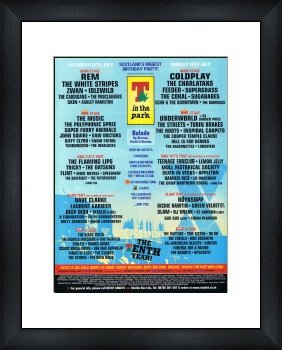
COLDPLAY T in the Park Festival 2003 - Custom Framed Original Concert Ad - Framed Music Poster/Print

COLDPLAY T in the Park Festival 2003 - Custom Framed Original Concert Ad 42x34cm 23mm black wood frame with white mat Glazed with plexiglass


One of the most popular, if not the most popular, shows among kids is High School Musical. This show now has two movies, with a third on the way, and has become an unbelievable phenomenon that has made stars out of the actors in the show, and turned millions of kids onto music.

Obviously, when something becomes this popular, it is only a matter of time before your kids start asking for a High School Musical-themed birthday party. So what ideas are good for this type of birthday party? Below are just a few examples.

Send The Invites

You can go two routes in terms of invitations. You can use invitations that come with the High School Musical party supplies, or you can go a step further just by using your computer. Print off tickets for the kids so they can take the tickets with them and get entry into the party at your house. Make it look like they are tickets to a special High School Musical show, starring your child. If a child forgets to bring their invite, no worries, let them in. You can even stamp their hands for reentry, just to add a bit more style to the whole thing.

Watch the Movies

What would a High School Musical-themed birthday party be without watching the movies? So, rent the movies, if you don't already own them, and treat the kids to the movies while you prepare the rest of the birthday party. It is up to you if you want to show both of the movies, or just one of them. If you only have time for one, ask the kids which one they want to see and then go with that one for the kids to watch.

Dance Competition

One big thing about High School Musical is the dancing. Everyone in the movies dances, so get the kids dancing too. You can even have a dance contest that will have the kids showing their stuff on the dance floor. At the end of the dance contest, award everyone an individual award so that no one feels out of place. You can range it from "Best Dancer" and "Killer Moves!" to "Wackiest Dance" and "Future Star!"

High School Musical is unbelievably popular and if your child wants a High School Musical-themed birthday party, you need to be ready to provide it. However, thanks to creativity and some birthday party supplies, you can create a birthday party they will remember for a very, very long time.

For even more great High School Musical Birthday Party Ideas, visit Birthday Supply Depot.

latin music downloads

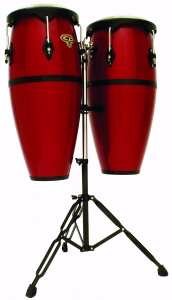
CP 9" & 10" Red Fiberglass Conga Set with Stand

Total height of the set ranges from 33" to 45-1/2" (from the floor to the top of the drum heads). A great conga set for musicians in the early elementary or middle school age range!


Anyone who has tried to play lead guitar in the style of Carlos Santana will know how difficult it is to duplicate. I am not referring to copying a Santana solo from a TAB sheet, we're talking about understanding how Carlos creates his powerful solos.

Santana's powerful solos are a blend of interesting harmonic textures mixed with traditional earthy scales. Of course, there's a lot more to Carlos Santana's music than scales and chords, Carlos is a very definite guitarist, every note he plays is packed with energy and emotion.

Guitarist's trying to learn Santana's guitar solos often encounter notes and chords outside the standard guitar resource material of minor pentatonic scale plus power chord combination.

Here's 5 tips to help guitarist's grasp the concepts behind Santana's music.

1. Learn the Harmonic Minor scale .

Guitarist's who already know the natural minor scale can easily create the Harmonic minor scale by sharpening the seventh note of the natural minor scale.

Let's use the "A" natural minor scale as an example.

The notes in the "A" natural minor are as follows: A, B, C, D, E, F, G, A.

By sharpening the G we create the "A" harmonic minor scale: A, B, C, D, E, F, G#, A.

The natural minor scale is also known as the Aeolian mode.

2. Study chords produced from the Harmonic minor scale.

As the name implies the Harmonic minor scale produces as interesting family of rich sounding chords.

The following chords are created from the "A" harmonic minor scale.

chord 1 = A minor (#7), chord 2 = B minor 7th flat 5, chord 3 = C major 7th sharp 5, chord 4 = D minor 7th, chord 5 = E dominant 7th, chord 6 = F major 7th, chord 7 = G sharp diminished 7th.

The "A" minor (#7) chord is also known as a minor/major seventh chord e.g., Am (MAJ7).

The B minor 7th flat 5 chord is also known as a B half diminished chord.

3. Play the standard Harmonic minor chord progressions.

The most common chord progressions are the 2-5-1, 1-4-5, 1-6-2-5, 1-6-4-5 and 1-6-5 progressions.

The following examples are given in the key of A harmonic minor, notice how the preference is for a straight minor chord for chord one instead of a minor sharpened seventh.

2-5-1 = B minor seventh flat 5, E dominant seventh, A minor./ 1-4-5 = A minor, D minor seventh, E dominant seventh. /1-6-2-5 = A minor, F major seventh, B minor seventh flat 5, E dominant
seventh. / 1-6-4-5 = A minor, F major seventh, D minor seventh,E dominant seventh. / 1-6-5 = A minor, F major seventh, E dominant seventh.

4. Blues scale played over Harmonic minor chord progressions:

Obviously the harmonic minor scale will work well over the chord progressions created from that scale. Santana often plays the blues scale over the harmonic minor chord progressions.

Here is an example, the "A" blues scale consisting of the notes A,C,D,Eb,E,G can be played over a B minor seventh flat 5, E dominant seventh and A minor chords progression.

5. Let to play the Dorian Mode:

A number of popular Santana tunes are based on the Dorian mode. The song "Evil Ways" is in "G" Dorian the notes for G Dorian are: G,A,Bb,C,D,E,F,G. Whilst the tune "Black Magic Woman" is derived
from the "D" Dorian mode: D,E,F,G,A,B,C,D.

Learning new scales and chords can be very interesting, it is vitally important to be able to "hear" these new sounds, record the chord progressions and pay close attention to how each chord sounds so you can recognize them when you hear them new time.

The Santana style of playing can add a new dimension to your guitar playing and improve your ability to play guitar by ear, take your time and enjoy these interesting sounds.

Mike Hayes develops systems and products to help you succeed in your guitar playing. Find out more about how to learn guitar fast with his popular free ecourse, available at: => http://www.guitarcoaching.com

dance music 2007

Latin Thug - 4 Life Beater - Women's T-Shirt


Are CDs still a sound investment?

There was once a time that the first milestone in a band's career was pressing a CD. There was always something special about the perfectly shrink- wrapped plastic case, the look of promise contained within the albums cover, and the power of a barcode branded in black and white on the tray card. For most, having a professionally pressed disc was like a signal that they've arrived and are proudly showing the world their art. While many still gauge their musical success in the culmination of a packed CD, the allure of digital downloads has caused many to question the need for CD Duplication in the future.

Ease of Use

Digital downloads, most commonly offered in the popular mp3 format, have quickly become a favorite of many music fans due to their easy transferability and lower cost. Mp3s use a process called psychoacoustic masking to compress a standard audio file into a smaller file size with very little if any audible quality loss ( mp3 vs CD quality test). This technology allowed artists to offer high-quality renderings of their music directly to fans through online stores like iTunes or directly from their website. Because the band no longer had to front the manufacturing cost of the audio CD duplication or music CD duplication , they are usually able to offer their music at a low price than that of a standard compact disc.

The Physiological Factor

While, mp3 technology can be beneficial to both the artist and the consumer, there are some disadvantages to purchasing music in a digital format. Aside from the loss of certain frequencies, mp3s typically live on a computer or portable listening device, which can be susceptible to data loss and system failure. Because of copyright concerns, music lost in computer crashes cannot be recovered without paying for all your songs again. For users that don't back up their data, there is a substantial risk of losing your entire music collection and ultimately your investment.

Also, many music fans still like the feeling of holding a tangible product in their hands. For them reading a CD booklet, and the physiological experience of holding a piece of the artist's work is an important experience. These same fans are probably also likely to purchase merchandise at an artist's performance or show. Since mp3s are a downloadable format, artist's who opt for mp3 only releases may loose out on a percentage of sales and impulse buyers who want to take home souvenirs of their concert.

Consumer Options

With no shortage of compelling arguments for both formats, the only thing that is certain is that technology is giving both musicians and fans a broader range of options. Because selling mp3s through digital distribution websites cost no additional money, bands can manufacture standard CDs for those who prefer owning discs, and output high-quality mp3s for fans satisfied with lower priced downloads. In order to reach all of your target audience, it makes the most sense to provide as many buyer options as possible to maximize your potential market and ultimately album sales.

For further information, visit www.Audio-CD-Duplication.com or contact at sales@audio-cd-duplication.com.

C. Jason writes many articles on technology related issues for http://www.Audio-cd-duplication.com. An excellent orator, pens down the critical facts for the Audio and Music Digital World.

latin music downloads